Mexican folk art guide
What Are Milagros? The Meaning of Mexican Milagro Charms

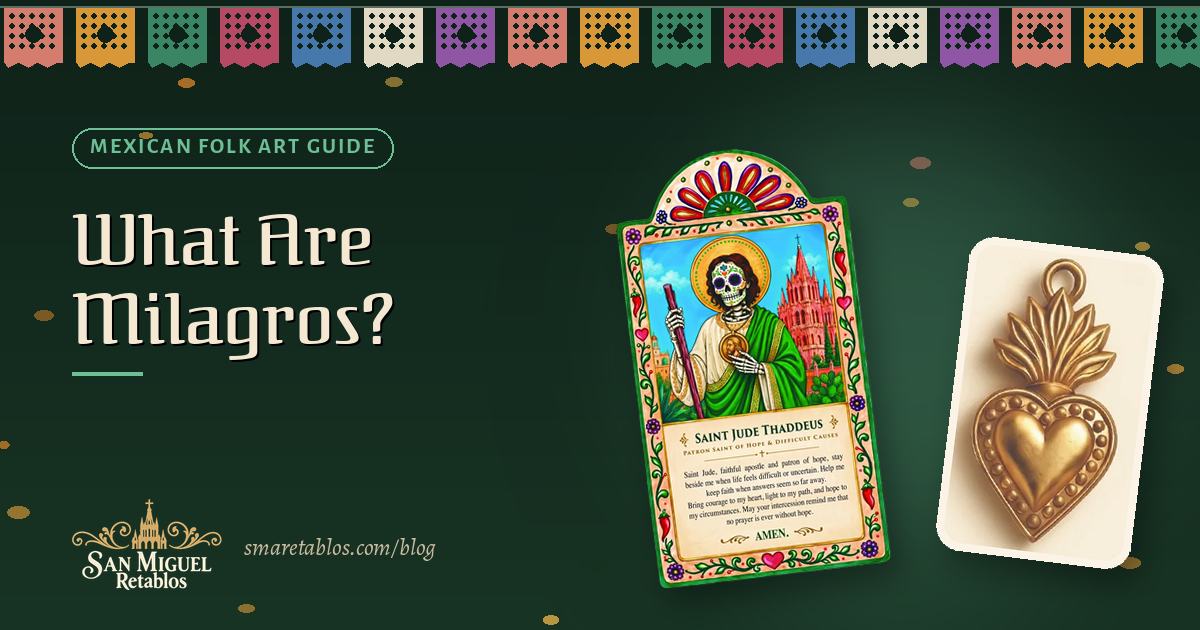
Milagros are small religious charms, usually stamped from tin, brass or silver, shaped like a heart, an eye, a leg, a praying figure or another form. In Mexico people offer them to a saint, the Virgin or Christ to ask for help with a specific need, or to give thanks once a prayer has been answered.
The word milagro means “miracle” in Spanish, and in Mexico you will often hear the affectionate milagrito. Look closely at a church statue in almost any Mexican town and you may see dozens of them pinned to the saint’s robes or to a velvet panel beside it, each one a small, silent story of a petition or a promise kept.
Here is where the tradition comes from, what the common shapes mean and how milagros are used today, in church and at home.
Where milagros come from
Leaving a symbolic object at a holy place is an ancient practice. On the Iberian Peninsula, small bronze votive figures that look much like modern milagros were offered centuries before Christ. The custom continued in medieval Spanish Catholicism and traveled to the Americas with the Spanish.
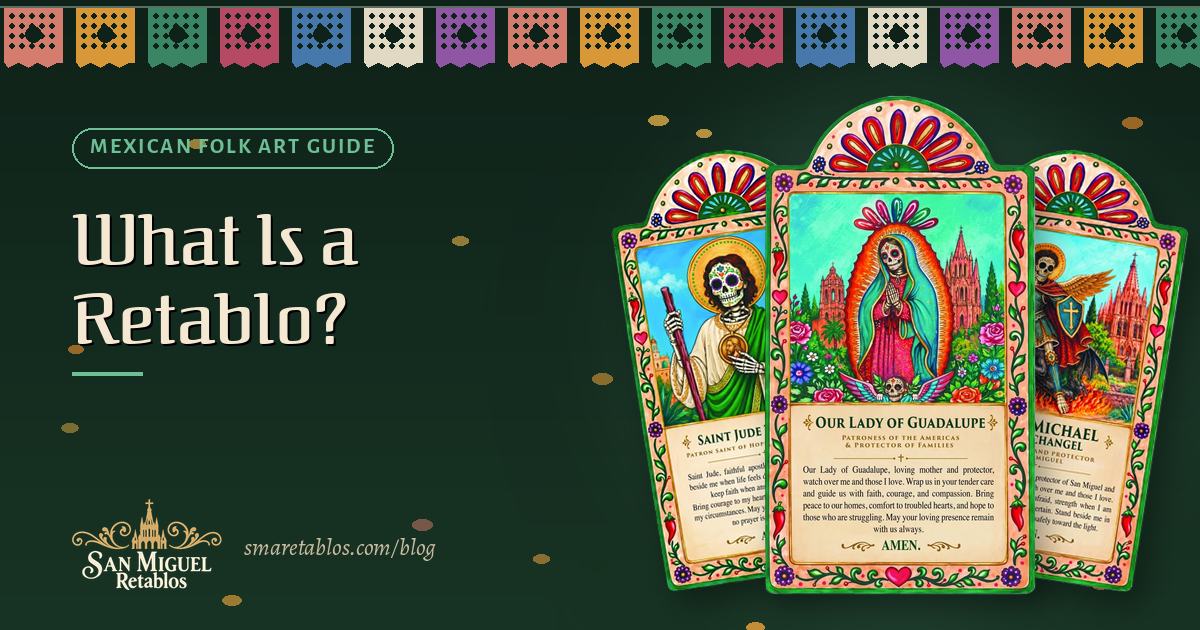
In Mexico it met Indigenous traditions of offering gifts to the gods, and the two blended. Milagros became one of several kinds of ex-voto, offerings made “from a vow,” alongside the small painted thank-you scenes on tin that you can read about in our guide to Mexican retablos.
What the common milagro shapes mean
There is no single official dictionary of milagros. The shape usually points to the need, but the meaning belongs to the person who offers it. These are the most common readings:
- Heart: a heart condition, but also love, a relationship, grief or an intention held close. A heart with flames is often a Sacred Heart (see below).
- Eye or pair of eyes: eyesight, an eye illness or surgery.
- Leg or foot: an injury or illness of the leg, and sometimes a journey, since legs carry us.
- Arm or hand: an injury, and often a person’s work or livelihood.
- Head: headaches, worry or troubles of the mind.
- Lungs, breasts or other organs: healing for that part of the body.
- Kneeling or praying figure: devotion itself, or a person someone is praying for.
- Baby or child: a pregnancy, a birth or the health of a child.
- Animals: a cow, horse, dog or other animal a family depends on or loves.
- House or car: a home, safe travel or protection on the road.
- Fruits, corn and crops: a harvest or a family’s food.
The Sacred Heart milagro
One of the most beloved shapes is the Sacred Heart: a heart crowned with flames, often wrapped in a crown of thorns and topped by a small cross. It represents the love of Jesus for humanity. The flames speak of that burning love, the thorns of the suffering caused by sin, and the cross of the crucifixion, which the image places at the very center of his heart.
The devotion was spread in the 17th century by Saint Margaret Mary Alacoque, a French nun who described seeing the heart of Christ “on a throne of flames, more brilliant than the sun,” encircled by thorns. As a milagro, the Sacred Heart is offered less for a single ailment and more as an act of love and trust, or for a petition that touches every part of life.
How milagros are used in church
In Mexican churches, milagros are pinned to statues, crosses and altars, or attached to cloth panels and frames near a favorite image. Many are part of a manda, a promise made to a saint: a person asks for a favor, and once it is granted, they visit the saint’s shrine and leave a milagro in thanks, sometimes with a handwritten note or a photograph.
Milagros are sold in church shops and by vendors outside shrines and in markets. Before you pin one in a church, ask whether the parish allows it; some have a designated place for offerings, and some collect them periodically.
How to use a milagro at home
You do not need to be at a shrine to use a milagro. Many families keep them close to the images they pray with every day.
- Tie or pin one beside a saint image on your home altar, such as Saint Jude, patron of hope and difficult causes.
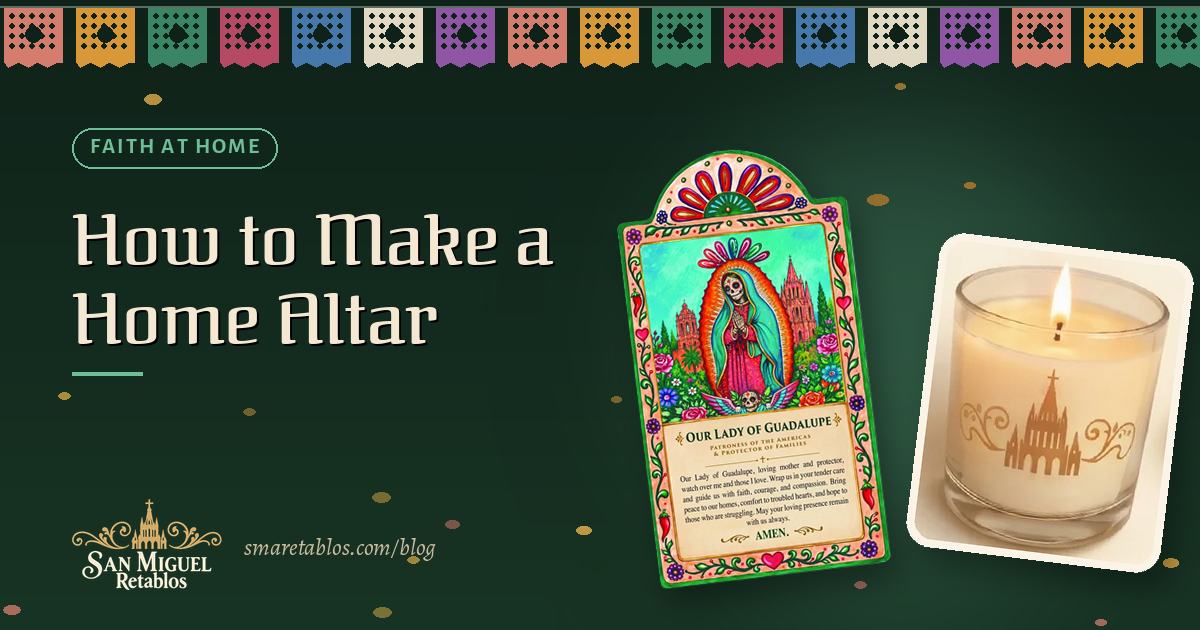
- Set it in front of a retablo of Our Lady of Guadalupe with a candle when you pray for your family.
- Carry one in a wallet or pocket as a reminder of a prayer.
- Tuck one into a card or gift for someone who is ill, grieving or starting something new.
- Keep it after the prayer is answered, as a quiet record of thanks.
A small gift with a big meaning
Because a milagro stands for a hope, it makes a thoughtful gift. That is why our gift box at San Miguel Retablos includes a milagro charm together with a saint retablo, a prayer card, a candle and matches, so the person who receives it has everything for a simple moment of prayer.
Frequently asked questions
Are milagros good luck charms?
They are religious offerings first. In Catholic practice a milagro accompanies a prayer to a saint, the Virgin or Christ. Some people also carry them for protection, but the meaning comes from the prayer, not from the metal.
Can anyone use a milagro?
Yes. You do not need permission or a special blessing to keep one, though many people ask a priest to bless religious objects. If you are not Catholic, using one with respect, as a sign of hope or care, is welcome in most Mexican homes.
What do I do with a milagro after my prayer is answered?
Traditionally you give thanks, either by leaving the milagro at the saint’s shrine or church as part of a manda, or by keeping it on your home altar as a reminder.
What are milagros made of?
Most are stamped or cast from tin, brass or other inexpensive metals. Silversmiths also make silver or gold milagros, and in some places they are made of wax or wood.
If you would like to give a milagro with meaning, our gift box pairs one with a saint retablo, such as Saint Jude for hope or Our Lady of Guadalupe for family, made in San Miguel de Allende.

About the author: Lesley B. Fay
Lesley B. Fay runs San Miguel Retablos from her studio at Hidalgo 52A in the Centro of San Miguel de Allende, Mexico, where she creates Catrina saint retablos with artist Leslie Kate. She writes about the traditions, saints and celebrations behind each piece.
Sources
- en.wikipedia.org — en.wikipedia.org/wiki/Milagro_(votive)
- lammuseum.wfu.edu — lammuseum.wfu.edu/2024/10/mexican-milagros/
- chilango.com — www.chilango.com/cultura/exvotos/
- aleteia.org — aleteia.org/2018/06/08/explaining-the-strange-symbolism-of-the-sacred-heart/