Day of the Dead guide
How to Make an Ofrenda: What to Put on a Day of the Dead Altar and What It Means
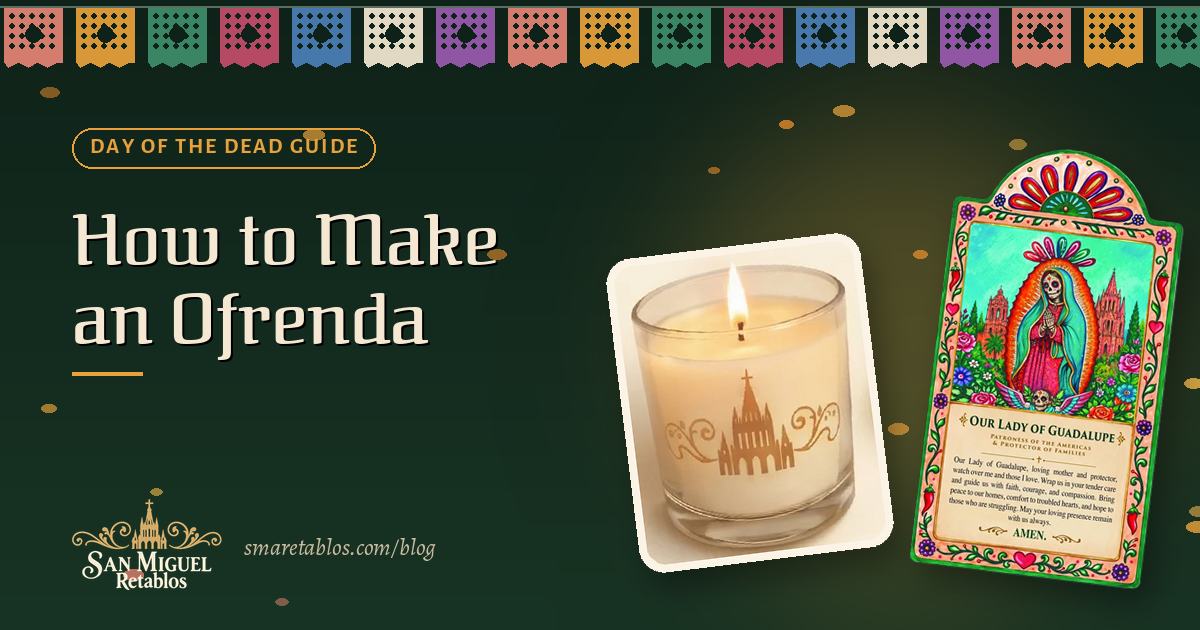
An ofrenda is a home altar built to welcome the souls of loved ones who have died. To make one, you choose a table or shelf, arrange it in one or more levels, and fill it with photos of the people you are honoring, marigolds, candles, water, salt, pan de muerto and the foods and drinks they loved. Every element has a purpose: to guide the souls home, to refresh them after a long journey, and to show that they are still remembered.
The ofrenda sits at the heart of Día de los Muertos, the celebration that UNESCO describes as honoring the temporary return of deceased relatives to the world of the living. There is no single correct version. Altars change from region to region and from family to family, and a small, heartfelt ofrenda is as meaningful as a grand one.
Below is a practical guide to building your own, with the traditional meaning of each piece.
When to set up your ofrenda
Many families in Mexico begin setting up their altar in the last days of October so it is ready before the souls are believed to arrive. In popular tradition, November 1 is dedicated to children who have died, often called angelitos, and November 2 to adults. Some communities also set aside days in late October for other souls, such as those who died in accidents or those no one remembers.
The ofrenda usually stays up through November 2. Afterward, families often share the food that was offered, since it is said the souls have already taken its essence.
Choose the levels of your altar
The simplest ofrenda has a single level: a table covered with a cloth. Many families build two or three levels with boxes or crates under the tablecloth. A common interpretation is that two levels represent heaven and earth, and three levels represent heaven, earth and the underworld. Some regions build seven levels, linked with the steps a soul takes to reach rest.
Photos and religious images usually go at the top, and food, drink and personal objects on the lower levels. If you are short on space, one level is perfectly traditional.
What to put on an ofrenda and what each element means
These are the elements you will see on most Mexican altars, with the meaning traditionally given to each:
- Photos of your loved ones: the center of the altar. They show who is being welcomed home. Many families add a personal object, such as a hat, a rosary or a favorite cup.
- Cempasúchil (marigolds): their bright orange color and strong scent are said to guide the souls. Petals are often scattered in a path from the door to the altar. Read more in our guide to why marigolds are used.
- Candles and veladoras: light that guides the souls on their way. Some families place one candle for each person they are remembering.
- Water: a glass of water to quench the thirst of the souls after their long journey.
- Salt: a small dish of salt, traditionally associated with purification.
- Pan de muerto: the sweet bread of the season, decorated with shapes that recall bones. It represents generosity and the gifts of the earth.
- Copal or incense: its smoke is linked with the rising of the spirit and is used to cleanse the space.
- Papel picado: colorful cut paper banners that move with the air, often seen as the meeting of life and death. Learn more about papel picado.
- Sugar skulls: sometimes with a name written on the forehead, they stand for the departed. See our article on sugar skulls.
- Favorite foods and drinks: the mole, tamales, fruit, chocolate, coffee, tequila or soda your loved one enjoyed in life. This is what makes each ofrenda personal.
How to build it step by step
- Pick a quiet spot in your home where the altar can stay for several days without being disturbed.
- Set up the levels with boxes and cover them with a white or colorful cloth.
- Hang papel picado above or along the front of the altar.
- Place the photos and any religious images on the top level.
- Arrange the candles, water, salt and copal. Keep candles away from paper and flowers, and never leave them burning unattended.
- Add pan de muerto, sugar skulls, fruit and favorite dishes on the lower levels.
- Finish with marigolds in vases and a path of petals leading from the door.
Faith on the ofrenda
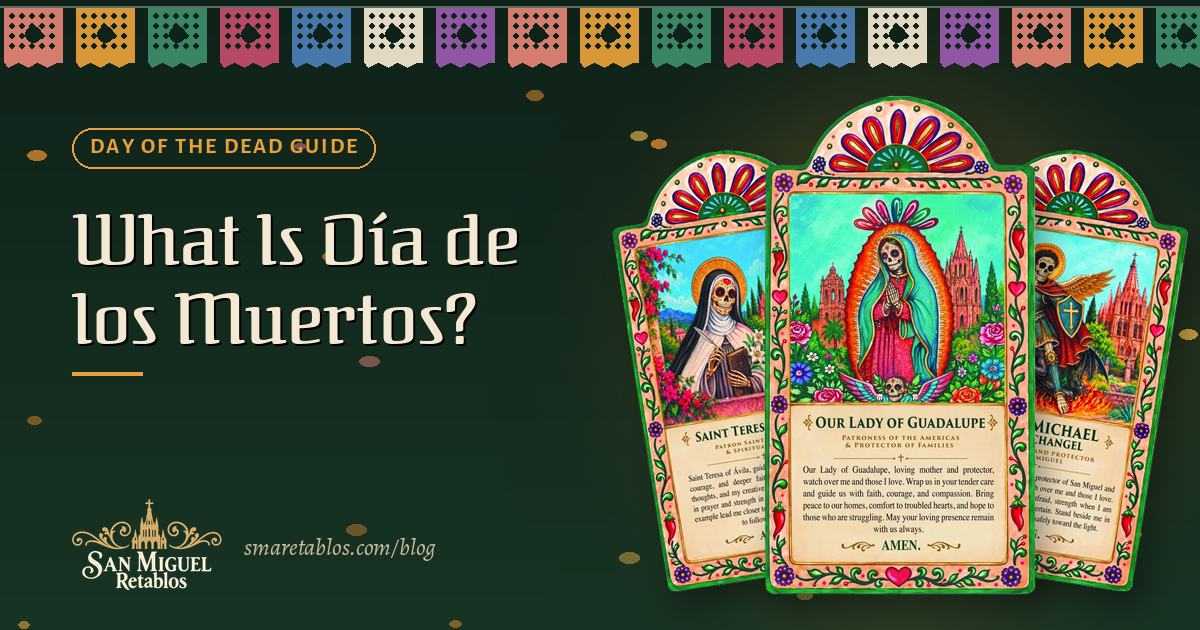
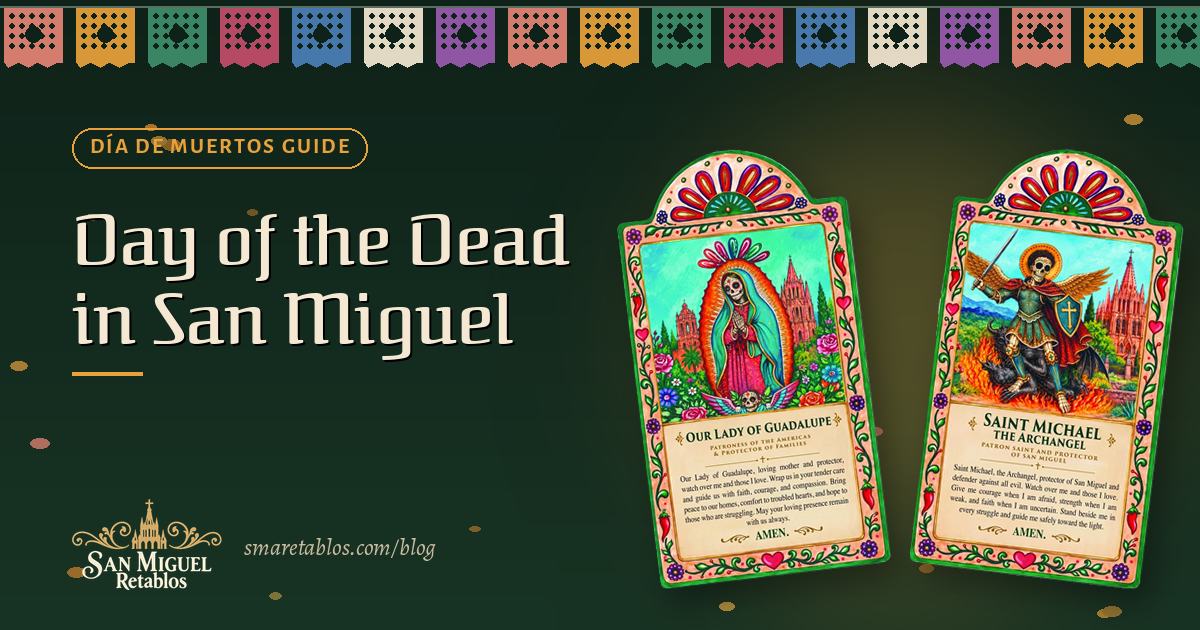
For many Catholic families, the ofrenda is also a place of prayer. It is common to see a cross, a rosary, or an image of a beloved saint or of Our Lady of Guadalupe, who watches over so many Mexican homes. Some families include Saint Michael the Archangel, traditionally invoked as a protector and a guide of souls.
This blend is not a contradiction. As UNESCO notes, the celebration brings together pre-Hispanic rites and the Catholic feasts of All Saints and All Souls. If you would like to keep an altar all year, our guide to a home altar has ideas.
Tips for a first ofrenda outside Mexico
If you live in the US, you can find marigolds at many florists and Mexican markets in late October, and pan de muerto at Mexican bakeries. Choose foods that mean something to your family rather than trying to copy a picture. A single photo, a candle, a glass of water and a few flowers already make a true ofrenda, because what matters most is the memory you bring to it.
Frequently asked questions
When should I put up my ofrenda?
Most families set it up in the last week of October and keep it until November 2. In popular tradition, children are remembered on November 1 and adults on November 2.
Can I make an ofrenda if I am not Mexican?
Yes, as long as you do it with respect. An ofrenda is an act of remembrance, and many families in the US build one to honor their own loved ones. Learning what each element means is the best way to start.
What do I do with the food after Day of the Dead?
Many families share it after November 2. It is said the souls have taken the essence of the food, and eating it together is part of the celebration.
Do I need all the elements for the ofrenda to be valid?
No. Altars vary widely across Mexico. A photo, a candle, water and flowers are a meaningful beginning, and you can add more each year.
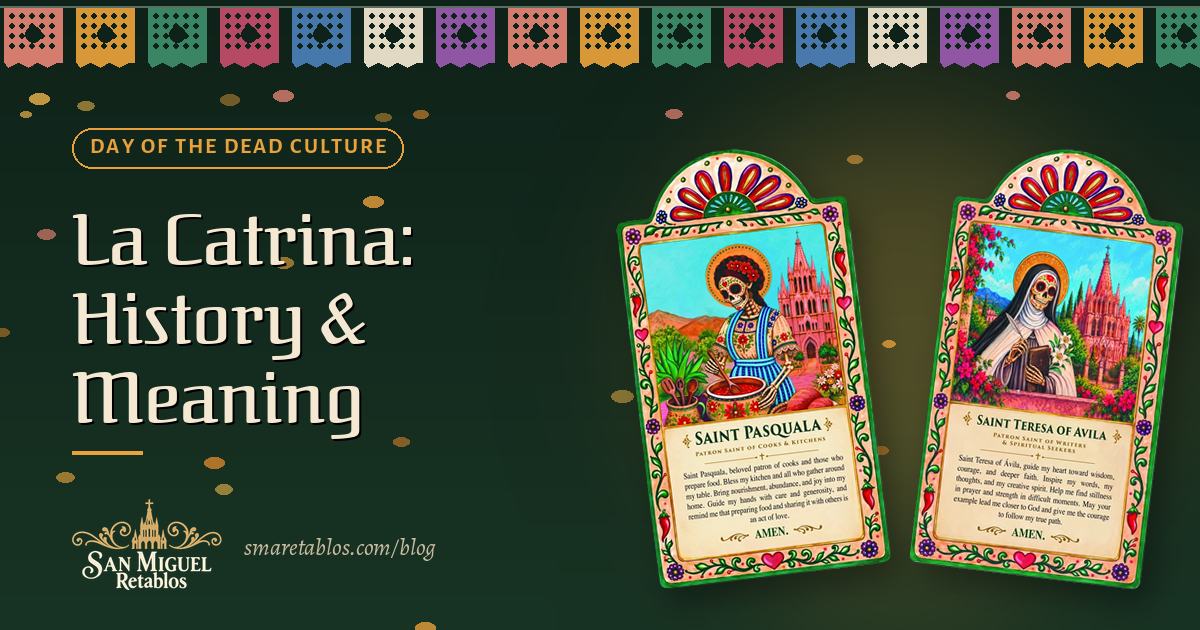
At San Miguel Retablos in San Miguel de Allende we paint saints as Catrinas to honor the same spirit of remembrance. A Guadalupe retablo or a gift box with its own candle and matches can become a lasting part of your ofrenda.
About the author: Lesley B. Fay
Lesley B. Fay runs San Miguel Retablos from her studio at Hidalgo 52A in the Centro of San Miguel de Allende, Mexico, where she creates Catrina saint retablos with artist Leslie Kate. She writes about the traditions, saints and celebrations behind each piece.
Sources
- ich.unesco.org — ich.unesco.org/en/RL/00054
- personal.unam.mx — www.personal.unam.mx/Docs/Cendi/dia-de-muertos-elementos-de-la-ofrenda.pdf
- mexicodesconocido.com.mx — www.mexicodesconocido.com.mx/calaveras-de-azucar.html
- expansion.mx — expansion.mx/tendencias/2025/10/21/flor-de-cempasuchil-significado-dia-de-muertos