Día de Muertos guide
Day of the Dead in San Miguel de Allende: What to Expect and How to Visit

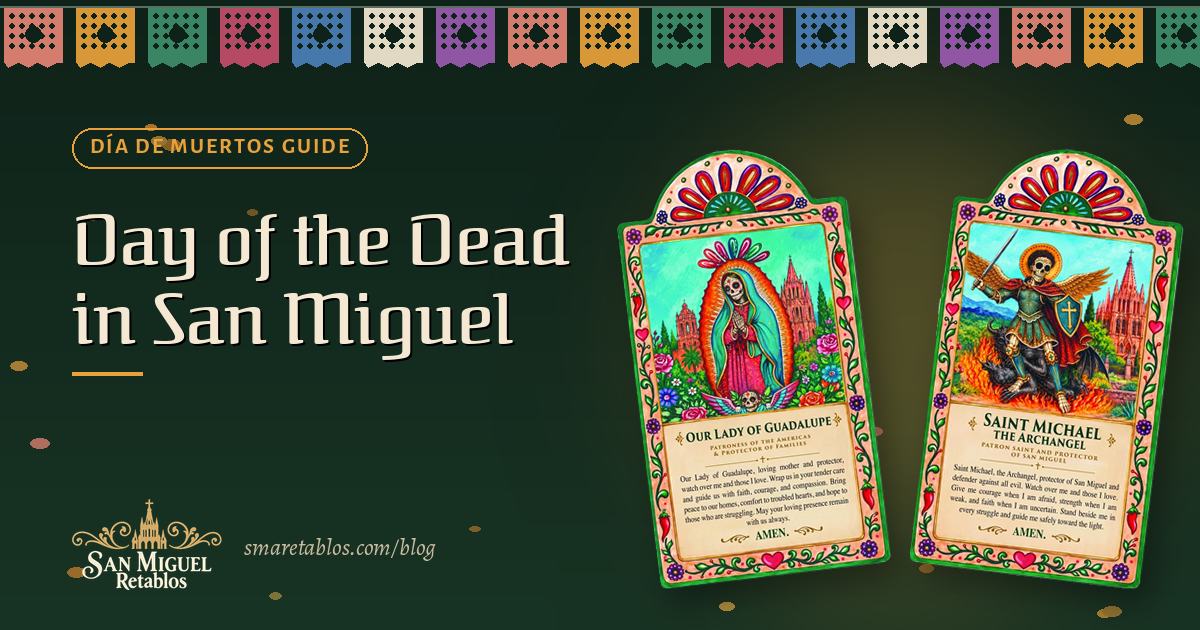
Day of the Dead in San Miguel de Allende is celebrated mainly on November 1 and 2, with events building through the last week of October. Expect ofrendas in the Jardín and in shop doorways, families decorating graves at the Panteón de Nuestra Señora de Guadalupe, a Catrina parade through the Centro, and the smell of cempasúchil marigolds everywhere.
It is a beautiful time to be here, and it is also a family and religious occasion for the people who live here. This guide covers what happens, where, and how to take part with respect.
Día de Muertos is not Mexican Halloween. It is a time when families welcome back the souls of their loved ones, and UNESCO recognizes the indigenous festivity dedicated to the dead as part of the Intangible Cultural Heritage of Humanity. For the bigger picture, start with our guide to the Day of the Dead.
When it happens: the key dates
- Late October: altars start appearing in hotels, restaurants and shops, bakeries sell pan de muerto, and the town programs plays, dance and music in the Jardín and at the Casa de la Cultura.
- November 1 (and in many homes from October 31): traditionally the day for children who have died, the angelitos. Families set out toys, sweets and small candles.
- November 2: the day for adults who have died. This is the busiest day at the cemetery, and the Parroquia has traditionally opened its crypt to the public on this day.
- The days after: some events continue into the first week of November, so check the municipal program for the current year.
The Panteón Guadalupe: visiting the cemetery
The town cemetery, the Panteón de Nuestra Señora de Guadalupe, is a short walk south of the Centro. On November 1 and especially November 2, families come to clean and decorate the graves with marigolds, candles and photographs, and to spend the day together. You may hear a mariachi playing a loved one's favorite song or see a Mass being said. The road leading in fills with vendors selling flowers, candles and food.
Visitors are generally welcome to walk through quietly. Think of it as a church on a feast day: dress modestly, keep your voice low, and never step on or sit on a grave. Above all, do not photograph people at a grave without asking. If a family invites you to share a moment, accept it as the honor it is.
Altars in the Jardín and around town
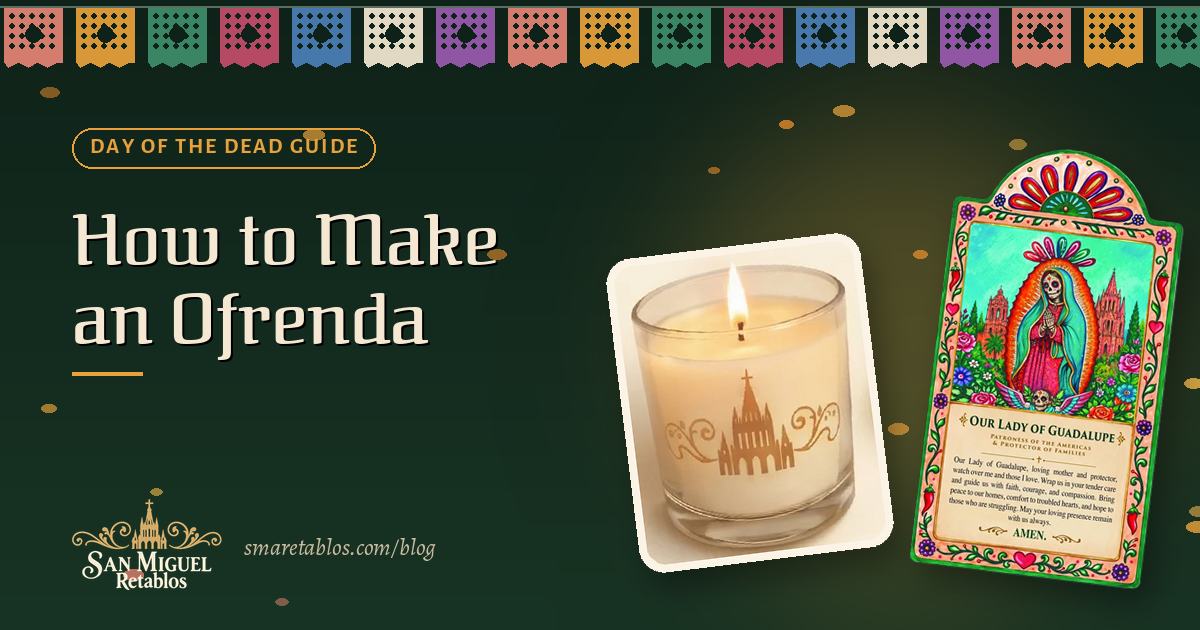
On November 2, ofrendas are set up in the Jardín Principal and nearby spaces such as the atrium of the Templo del Oratorio, and many businesses build their own. Look closely: every element has a meaning, from the marigolds that guide the souls with their color and scent, to papel picado for the wind, water for the thirsty traveler, salt, bread, candles and photographs. Our ofrenda guide explains each one.
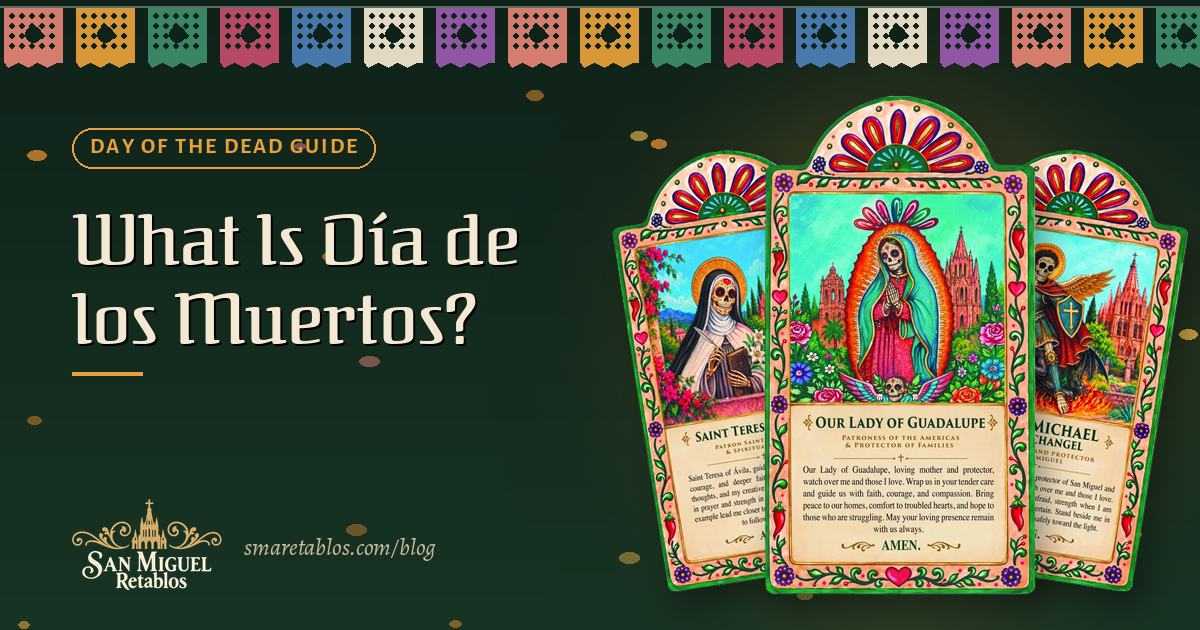
Many altars are dedicated to a beloved person, and some to a saint. You will often see Our Lady of Guadalupe watching over a family's offering.
The Catrina parade and face painting
The Day of the Dead parade, with costumed Catrinas and Catrines, giant puppets and music, usually winds through the Centro to the Jardín on the evening of November 2. In recent years it has started near El Cardo and ended in the Jardín, but the route can change from year to year.
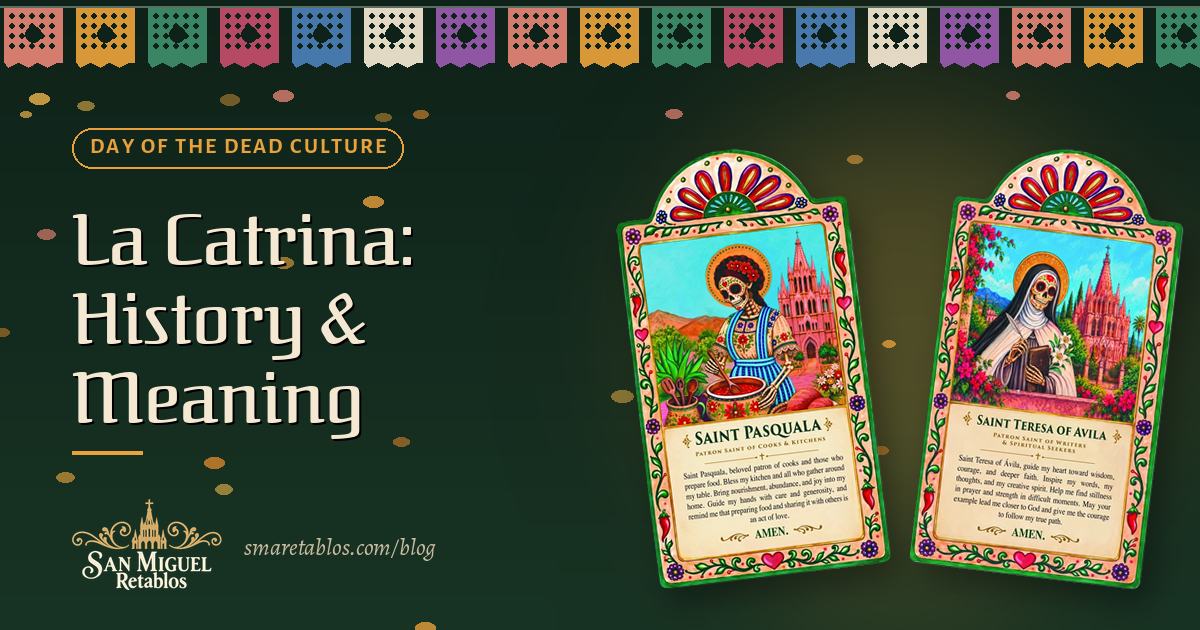
Face painting is everywhere in the Jardín, and many visitors join in. It is fine to dress up as long as you treat it as a tribute to La Catrina, José Guadalupe Posada's elegant skeleton who reminds us that death comes to everyone. Read the story in our article on La Catrina. Keep the costume festive, not mocking, and skip it entirely when you visit the cemetery.
Festivals: La Calaca and Vivos y Muertos
For several years in the 2010s, La Calaca Festival brought four days of participatory art, workshops and costume events to San Miguel around November 1, along with a children's program called Calaveritas at Parque Juárez. We could not confirm whether it is still held, so check current dates and listings before you plan around it.
The family-friendly Festival de Vivos y Muertos at Parque Juárez, the week before the Day of the Dead, celebrated its tenth edition in 2025, with art activities for children, performances and storytelling. Again, confirm this year's dates locally.
When to book and practical tips
- Book early. San Miguel fills up for the Day of the Dead. Reserve your room two to three months ahead, and even earlier for the Rosewood and boutique hotels in the Centro.
- Plan for crowds in the Jardín on November 1 and 2, and leave the car outside the Centro.
- Bring layers. Days are warm, nights in early November are cool.
- Carry cash for flowers, candles and food at the cemetery.
- Buy from local makers. Sugar skulls, papel picado and handmade crafts support the families who keep these traditions alive.
Frequently asked questions
What are the dates of Day of the Dead in San Miguel de Allende?
The main days are November 1 and 2, with altars, performances and events starting in the last week of October. November 2 is the busiest day in the Jardín and at the cemetery.
Can tourists visit the cemetery?
Yes, visitors are generally welcome at the Panteón Guadalupe if they are quiet and respectful. Ask before photographing anyone, and stay on the paths.
Is it respectful for visitors to wear Catrina makeup?
Many locals paint their faces and welcome visitors who do the same for the parade and the Jardín. Treat it as a tribute, not a Halloween costume, and remove it before visiting graves.
Is La Calaca Festival still happening?
We could not confirm its current status. Check the festival's official channels and local listings for the year you plan to visit.
If you are in town for the season, visit our studio at Hidalgo 52A, Centro. Our Saint Michael retablo, with the archangel as a Catrina before the Parroquia, is a lovely piece for your own ofrenda, and the gift box adds a candle, milagro and prayer card.
About the author: Lesley B. Fay
Lesley B. Fay runs San Miguel Retablos from her studio at Hidalgo 52A in the Centro of San Miguel de Allende, Mexico, where she creates Catrina saint retablos with artist Leslie Kate. She writes about the traditions, saints and celebrations behind each piece.
Sources
- ich.unesco.org — ich.unesco.org/en/RL/00054
- unotv.com — www.unotv.com/turismo/dia-de-muertos-en-san-miguel-de-allende-a-que-hora-y-que-dias/
- globalphile.com — globalphile.com/?p=49992
- burnerswithoutborders.org — burnerswithoutborders.org/grantees/la-calaca/
- en.wikipedia.org — en.wikipedia.org/wiki/San_Miguel_de_Allende