Day of the Dead guide
What Is Día de los Muertos? Meaning, Dates and Traditions of the Day of the Dead

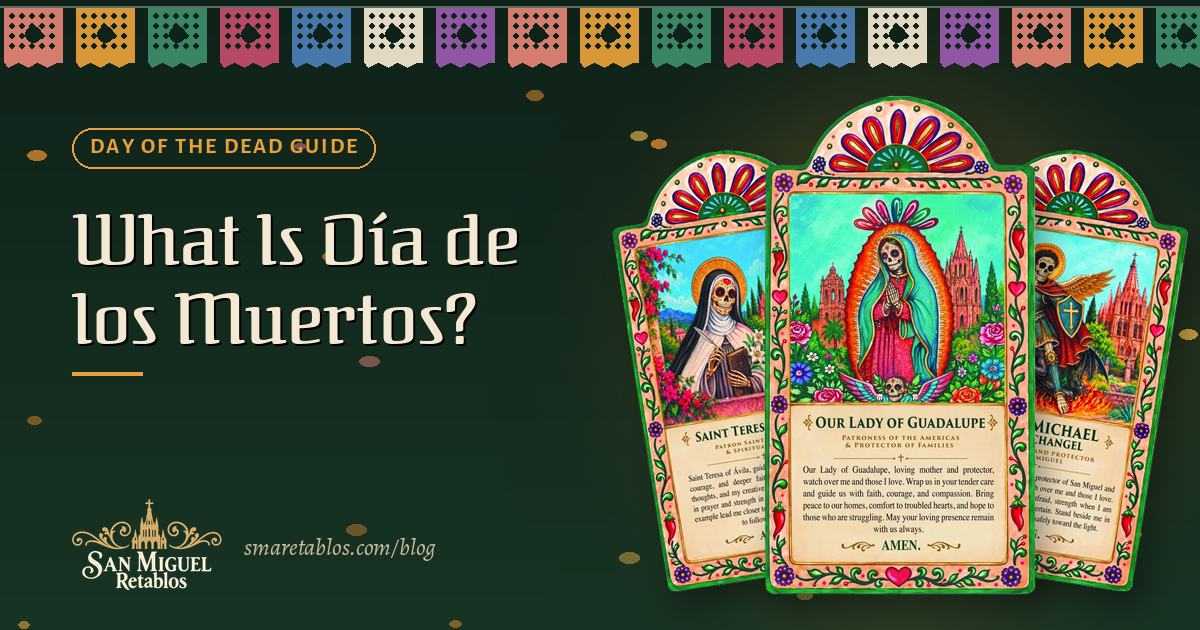
Día de los Muertos, the Day of the Dead, is a Mexican celebration in which families welcome back the souls of loved ones who have died. It is not a day of mourning or fear. It is a reunion: homes fill with marigolds, candles and favorite foods, cemeteries become places of music and conversation, and the dead are remembered with joy.
The main days are November 1, traditionally dedicated to children who have died, and November 2, dedicated to adults. In many communities the preparations and remembrances begin in the last days of October. In 2008 UNESCO inscribed the celebration, under the name Indigenous festivity dedicated to the dead, on its Representative List of the Intangible Cultural Heritage of Humanity.
Here is what the celebration means, what happens on each day, and why it is something quite different from Halloween.
What the Day of the Dead celebrates
At its heart, the Day of the Dead rests on a simple belief: that for a short time each year, the souls of the departed return to visit their families. UNESCO describes it as a celebration of the temporary return of deceased relatives and loved ones to Earth, and notes that it also marks the close of the annual maize cycle, the most important crop in Mexico.
Families prepare for these visitors as they would for honored guests. They build an ofrenda at home with photos, water, bread and the dishes the person loved. They clean and decorate graves. They tell stories, laugh about old habits and share meals. Death is treated as part of life, and remembering is a way of keeping people present.
The dates: what happens each day
The dates vary by region and by family, but a widely shared popular calendar looks like this:
- October 27: in some homes, a day to remember pets that have died.
- October 28: in many communities, the souls of those who died in accidents or sudden, violent deaths.
- October 29 and 30: depending on the place, those who drowned and the forgotten souls who have no one to remember them.
- October 31: in some traditions, babies who were never born or died before baptism.
- November 1: the deceased children, lovingly called angelitos, the little angels. It coincides with the Catholic feast of All Saints.
- November 2: the deceased adults, the most important day of the celebration. It coincides with All Souls Day.
Where it comes from: Indigenous roots and Catholic feasts
Long before the Spanish arrived, peoples of Mesoamerica had their own rites honoring the dead and their journey after death. In the sixteenth century, Spanish missionaries brought the Catholic feasts of All Saints on November 1 and All Souls on November 2, days of prayer for the dead in the Church calendar.
Over centuries the two traditions blended. UNESCO describes the festivity as a fusion of pre-Hispanic religious rites and Catholic feasts. That is why an ofrenda can hold copal incense and cempasúchil, both of Indigenous origin, side by side with a crucifix, a rosary and an image of Our Lady of Guadalupe. Many families attend Mass and pray for their dead during these days, then go to the cemetery to keep them company.
The symbols you will see
- The ofrenda: the home altar where the souls are received. See our guide on how to make an ofrenda.
- Cempasúchil: the orange marigold whose color and scent guide the souls home.
- Pan de muerto: the sweet bread of the season, decorated with shapes that recall bones.
- Sugar skulls: sweet calaveras, often with a name on the forehead. Read about sugar skulls.
- Papel picado: delicate cut-paper banners in bright colors. More in our article on papel picado.
- La Catrina: the elegant skeleton lady who reminds us that death comes to everyone. Discover the story of La Catrina.
How Day of the Dead differs from Halloween
Because the dates are close and both use skulls and skeletons, people sometimes call the Day of the Dead the Mexican Halloween. That label is not accurate. Halloween, as it is celebrated in the US today, is mainly about costumes, candy and playful scares, and ghosts are something to fear.
Día de los Muertos is about family and memory. The dead are not monsters but beloved guests. Skulls are not meant to frighten; they are painted with flowers and names, and often treated with affection and humor. The center of the celebration is not trick-or-treating but the ofrenda, the cemetery visit and the act of remembering someone by name.
Celebrating with respect
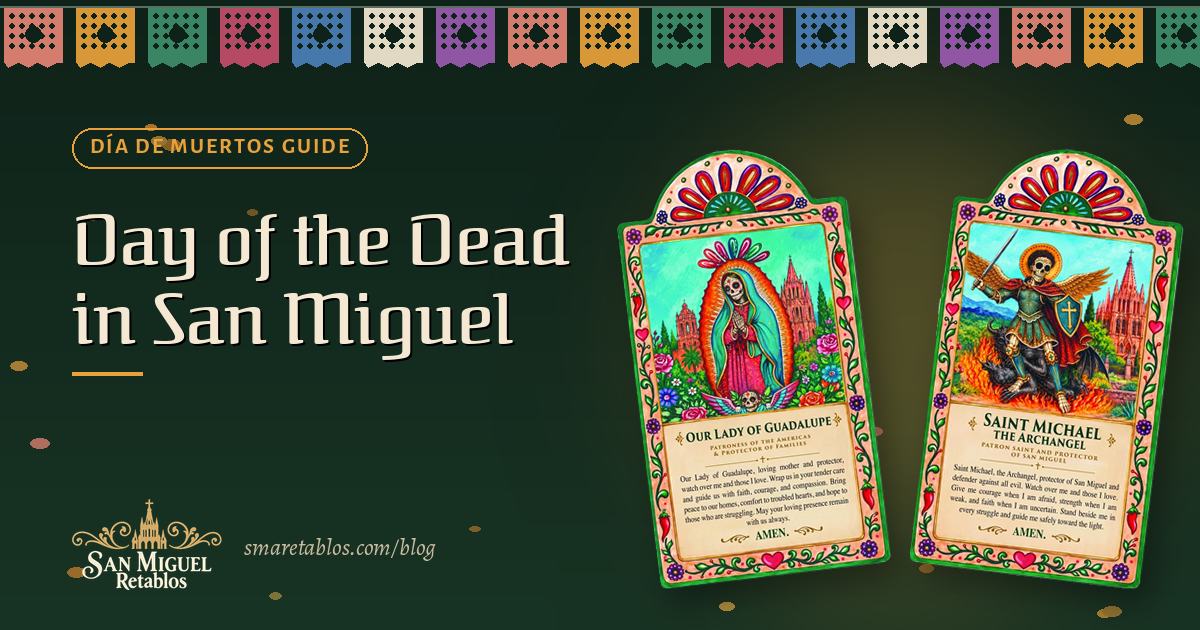
You do not need to be Mexican to honor this tradition, but it helps to understand it. Learn what each element of the ofrenda means, remember your own loved ones, and if you visit Mexico, be a quiet and respectful guest in cemeteries, where families are spending time with their dead. In towns like San Miguel de Allende the celebration fills the streets; see our guide to the Day of the Dead in San Miguel.
Frequently asked questions
When is Day of the Dead?
The main days are November 1 and 2. Many families and communities begin remembering specific souls from late October, around October 27 or 28.
Is Day of the Dead the same as Halloween?
No. Halloween centers on costumes, candy and fear, while Día de los Muertos is a family celebration that welcomes the souls of loved ones back home with altars, food and prayer.
Is Day of the Dead a Catholic holiday?
It blends both worlds. Its Indigenous roots joined the Catholic feasts of All Saints and All Souls, and many families combine prayer and Mass with their ofrendas.
Why is Day of the Dead recognized by UNESCO?
UNESCO inscribed it in 2008 on its Representative List of the Intangible Cultural Heritage of Humanity as a living tradition that unites Indigenous rites and Catholic feasts.
At San Miguel Retablos we paint saints as Catrinas in front of San Miguel's pink Parroquia, in the spirit of this celebration. Our Guadalupe retablo is a gentle way to bring that remembrance home.
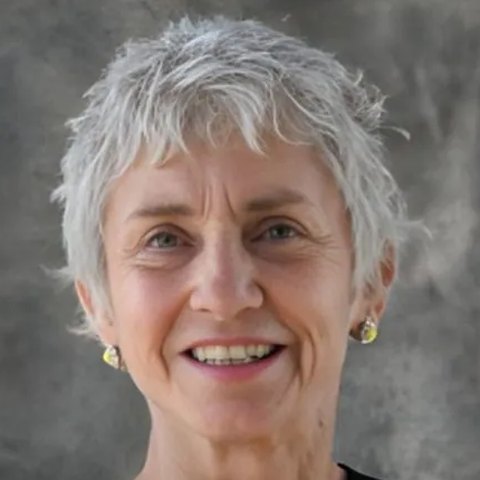
About the author: Lesley B. Fay
Lesley B. Fay runs San Miguel Retablos from her studio at Hidalgo 52A in the Centro of San Miguel de Allende, Mexico, where she creates Catrina saint retablos with artist Leslie Kate. She writes about the traditions, saints and celebrations behind each piece.
Sources
- ich.unesco.org — ich.unesco.org/en/RL/00054
- aztecajalisco.com — www.aztecajalisco.com/arte-y-cultura/dia-de-muertos-2026-que-almas-llegan-del-27-de-octubr
- personal.unam.mx — www.personal.unam.mx/Docs/Cendi/dia-de-muertos-elementos-de-la-ofrenda.pdf
- nationalgeographicla.com — www.nationalgeographicla.com/historia/2024/10/que-es-la-catrina-y-que-representa-en-el-dia