Day of the Dead traditions
Sugar Skulls: The Meaning and History of Calaveritas de Azúcar

Sugar skulls, or calaveritas de azúcar, are small skulls made of sugar and decorated with bright icing, foil and often a name across the forehead. During the Day of the Dead they are placed on the ofrenda to represent the loved ones who have died, and they are given to friends and family as sweet, affectionate reminders that life is brief.
They are not meant to be frightening. A sugar skull with your grandmother's name on it is a way of saying she is still part of the family. Their roots join a pre-Hispanic custom of honoring the dead with a sugar craft that arrived with the Spanish in colonial times.
Here is what sugar skulls mean, where they come from, how they are made and how to use them at home.
What sugar skulls mean
The meaning of a sugar skull depends on whose name it carries:
- For the dead: a skull with the name of a person who has died stands for that soul on the ofrenda and welcomes them home.
- For the living: in Mexico it is common to give a calaverita with a friend's name on it. It is a joke and a gesture of love at the same time, a reminder that we will all die and should enjoy life while we can.
- For children: smaller skulls are often placed for the angelitos, the children remembered on November 1.
- A sweet view of death: like La Catrina, sugar skulls show the Mexican way of facing death with familiarity, color and humor.
The history of sugar skulls
Writers on Mexican tradition often link sugar skulls to the tzompantli, the racks of skulls that stood in pre-Hispanic ceremonial centers. In this telling, after the Spanish conquest real skulls gave way to skulls made of sugar.
The technique itself came from Europe. Sugar skulls belong to the tradition of alfeñique, a sugar paste whose name and method reached Spain through Arab influence and then arrived in New Spain with the Spanish, who also brought sugarcane. Convents and confectioners developed it into a Mexican art. In Toluca, in the State of Mexico, alfeñique has been made since colonial times, and each autumn the city holds the Feria del Alfeñique under the portales of its historic center, where artisans sell skulls, Catrinas, animals and fruits made of sugar.
How sugar skulls are made
Traditional sugar skulls are cast in molds. Sugar is boiled with water until thick, beaten until it begins to crystallize, and poured into clay, wood or metal molds. The mold is then turned so the skull comes out hollow and light. Alfeñique figures that are modeled by hand use a paste of sugar, egg white and lime juice, with a natural binder called chautle.
Once dry, the skulls are decorated with icing made from egg white, powdered sugar and food coloring. Shiny foil is pressed into the eye sockets, and the name is piped across the forehead. Today you will also find skulls of chocolate and amaranth.
How to use sugar skulls on your ofrenda
- Place one skull for each person you are remembering, ideally with their name written on it.
- Put them on the lower levels with the pan de muerto, fruit and favorite foods, or near each photo.
- Add small skulls for children who have died, and one for the forgotten souls if you wish.
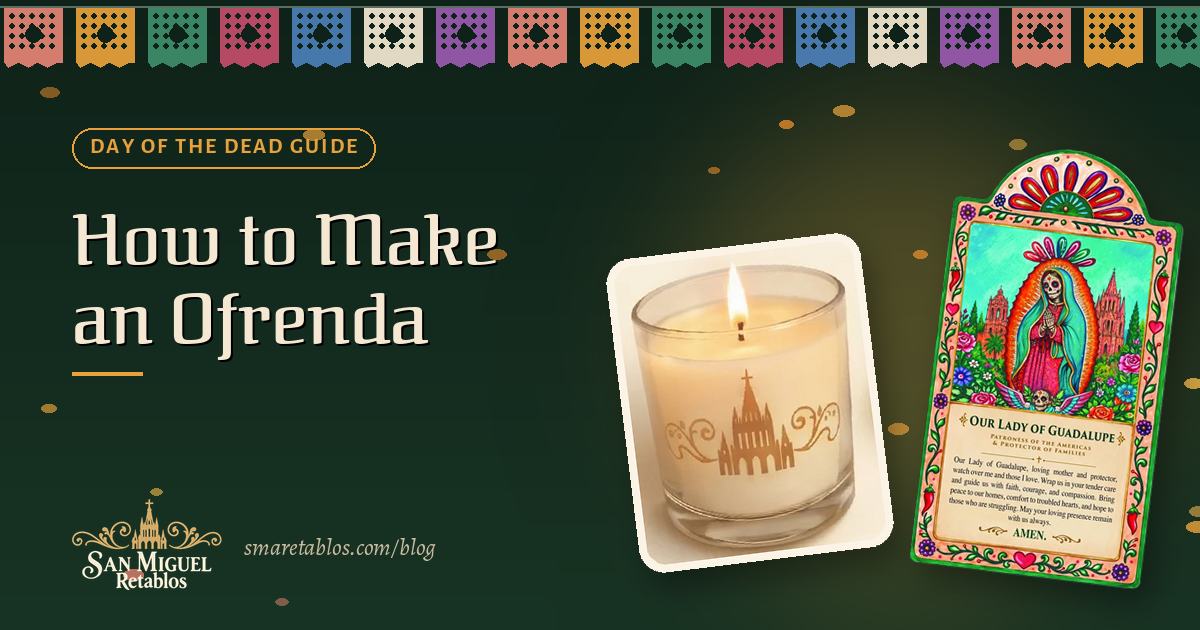
- Combine them with cempasúchil, candles and papel picado for a traditional look.
- After November 2, many families share the sweets, since it is said the souls have already taken their essence. Molded sugar skulls are often kept as decoration rather than eaten.
Calaveras literarias: skulls made of words
The word calavera also names a kind of poem. Calaveras literarias, or calaveritas, are short humorous verses in which death comes for a living person, often a politician, a teacher, a friend or a family member, and makes fun of their habits. They became popular in Mexican newspapers in the nineteenth century as a way to criticize public figures, and José Guadalupe Posada illustrated many of them with his famous skeletons.
Today children write calaveritas at school, newspapers publish them about politicians and celebrities, and friends exchange them in the days before November 2. Like the sugar skulls, they tease death and the living at the same time.
Making sugar skulls in your kitchen
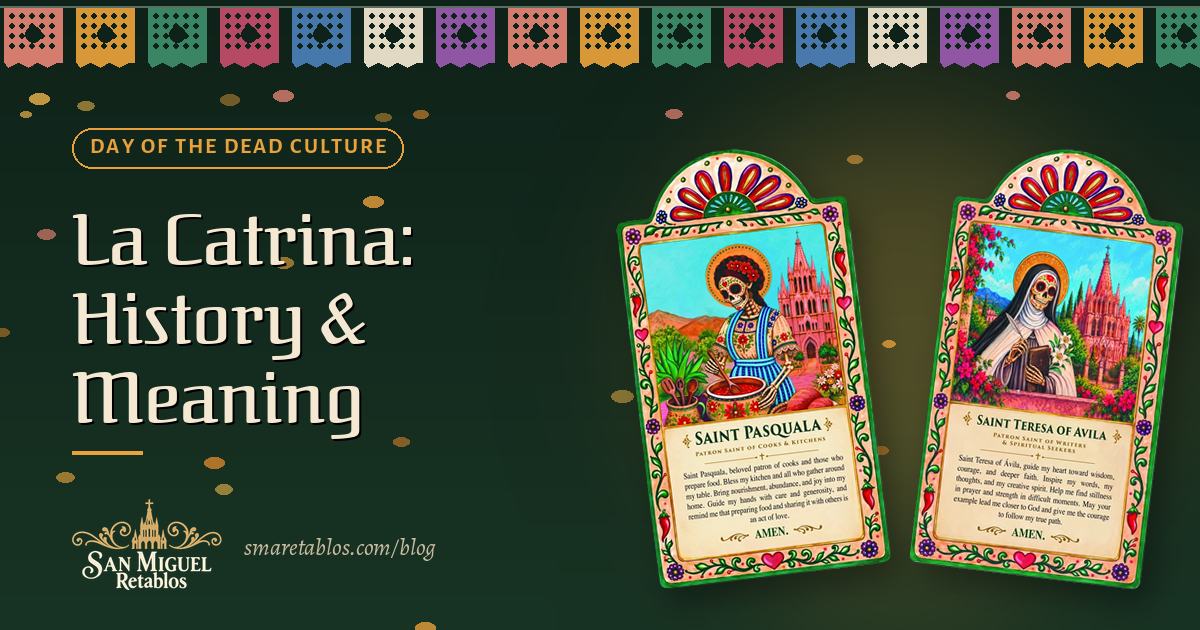
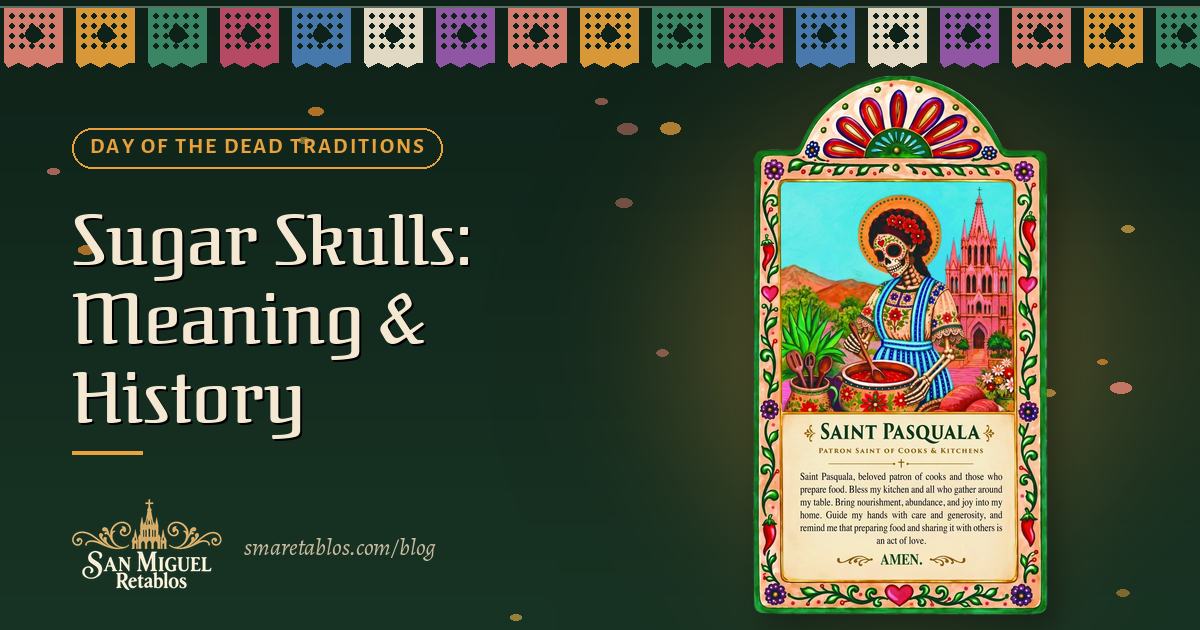
Decorating sugar skulls is a favorite family activity in the days before the ofrenda goes up. You can buy plain skulls in Mexican markets or make them with molds, then let children pipe colored icing and write the names of the relatives being remembered. It is a gentle way to talk with kids about the people who came before them, and the kitchen is the perfect place for it. That is the spirit of our Saint Pasquala, the Catrina patron of cooks, shown stirring a pot of mole.
Frequently asked questions
What do sugar skulls represent?
On the ofrenda they represent the souls of loved ones who have died, often with the person's name on the forehead. Given to the living, they are a playful reminder that life is short.
Can you eat sugar skulls?
Small sugar skulls are edible and many families eat them after the celebration. Large molded skulls with foil and heavy decoration are usually kept as decoration.
Why do sugar skulls have names on them?
The name tells which loved one the skull honors. In Mexico people also give skulls with a living friend's name as a sign of affection and humor.
What are calaveras literarias?
Short humorous poems written for the Day of the Dead in which death comes for a living person. They became popular in nineteenth-century Mexican newspapers as political satire.
At San Miguel Retablos in San Miguel de Allende, our Saint Pasquala retablo honors the cooks who keep these kitchen traditions alive. The gift box version, with milagro, prayer card and candle, makes a warm present for anyone who loves to cook.

About the author: Lesley B. Fay
Lesley B. Fay runs San Miguel Retablos from her studio at Hidalgo 52A in the Centro of San Miguel de Allende, Mexico, where she creates Catrina saint retablos with artist Leslie Kate. She writes about the traditions, saints and celebrations behind each piece.
Sources
- mexicodesconocido.com.mx — www.mexicodesconocido.com.mx/calaveras-de-azucar.html
- mexicodesconocido.com.mx — www.mexicodesconocido.com.mx/calaveras-de-dia-de-muertos-y-calaveritas-literarias-versos-d
- unotv.com — www.unotv.com/turismo/feria-del-alfenique-una-dulce-tradicion-en-toluca-que-encontraras/
- personal.unam.mx — www.personal.unam.mx/Docs/Cendi/dia-de-muertos-elementos-de-la-ofrenda.pdf